Tag Archives: cloud computing

Introducing Ekran System

As the General Data Protection Regulation (GDPR) looms, understanding who has access to a businesses data is increasingly important. If you believe that this could be an issue for you, we can help!  We can introduce you to Ekran System. It’s a screen recording, user monitoring/reporting and auditing software for both internal and external threats in your workplace.

What does Ekran System do?

Provides customers with an efficient, easy-to-use tool which addresses all monitoring needs as well as meeting security audit requirements.

When thinking about security, you might not necessarily think about your own employees being a threat. In 2016, 69% of surveyed businesses said they had experienced theft and corruption of sensitive data caused by internal users. These employees could be doing it for malicious intent, but it is also common for the individual to be naïve and impressionable.

Ekran System can record all privileged user systems and is capable of both application and internet monitoring. It can also provide several in-built access management tools. While still obeying industry rules and regulations it enables complete visibility into your IT infrastructure. The Ekran System can also be used to alert your security about potentially dangerous actions as they occur. A security specialist can block a user/ dangerous action if needed.

It also has the option to create complete video records of every user screen as well as activity details.

What are the benefits of Ekran System?

– Control and visibility of user activity
– Employee monitoring
– Third-party providers and contractors monitoring
– Suitable for businesses from all industry types
– Easy record archiving
– Quick incident response
– Enhanced record process protection
– Compliant with regulations
– Affordability

How can I get more information on introducing Ekran System to my workplace?

If you’re interested in adopting Ekran System, contact Smy IT Services and we’d be happy to help. We know the importance of security in your IT systems, and we are committed to giving you the best protection.

Cloud computing 101: What you need to know

You might have heard the term ‘cloud computing’ being bounced around from various IT specialists and adverts. If you have no idea what it is or how it works, this article can help fill in the gaps for you.

You are probably already on the cloud without realising it! Cloud computing is the delivery of services over the internet. Apps such as Netflix, Amazon or Spotify depend on the cloud. It allows you to stream videos and music over the internet onto your device. If you have an Apple device, you are probably using the cloud to backup your data and photos.

We use the cloud to deliver services which, in our instance, help you run your business. We are a high-quality IT support, cloud & consultancy provider. This means that we can effectively design, manage and maintain your computer systems and services such as Email, Telephony, Backup and Disaster Recovery all  from the Cloud.

We use a mix best-in-class technology, and geeky passion for excellent service to provide resilient award-winning services.
Using an accomplished and experienced IT provider who specialise in the Cloud for your business gives you the advantage of managing data effectively and saving on costs freeing you up to get on with growing your business.

We tailor services specifically to your business to ensure you can operate how you want, when you want, for a price you want.

Why?

Cloud computing means you can run all of your programmes and applications without having to buy extra software or hardware. As a cloud solutions provider, we have a central hub of programmes and provide these to your employees through the cloud. Therefore, you won’t be forking out money or taking up desk space!

What is the cloud used for?

You can use the cloud to host websites, stream videos, software applications and much more. Cloud computing is quite mature already but had endless possibilities and capabilities. We predict that it will become the norm for a huge variety of businesses because of its many benefits. Cloud computing allows you to access, share and utilise your data from any device whether you have an internet connection or not! It also fits in with flexible working which allows employees to work from home at any given time.

Is it secure to use the cloud for my business?

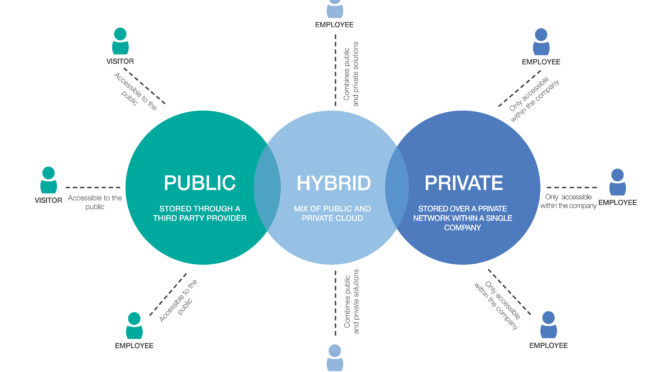
Not all clouds are the same, they can be public, private or hybrid. Third parties own public clouds and share them among lots of different companies. Meanwhile, a private clouds are accessed over a private network and operated by a single company. A hybrid cloud combines both public and private clouds together,  allowing businesses greater flexibility as well as more deployment options.

Choosing SMY IT as your cloud service provider means that we will be with you every step of the way. Whether it’s your first time setting up cloud computing or not, our aim to manage your computer system effectively and create a solution to suit your needs. Contact us to find out how we can help.

Explained: Cloud IT Acronyms

As computing revolutionises the world, a tremendous amount of confusing acronyms have popped up. Here SMY IT Services explain the most common ones you might come across:

SaaS (Software as a Service)

SaaS is software on-demand. As a result, users can subscribe or rent software, centrally hosted software on a pay-as-you-go basis. Office 365 and Salesforce are two of the largest providers today.

PaaS (Platform as a Service)

A resource for developers, PaaS provides the hardware and software infrastructure needed to create, run and manage custom-built applications. These platforms are scalable, flexible, and rented on a pay-as-you-go basis. Amazon Web Services (AWS) and Google are amongst the largest PaaS vendors.

IaaS (Infrastructure as a Service)

A virtual hardware which companies can purchase instead of owning and operating their own data centres. IaaS provides self-service access to remote data centre infrastructures that can be used for virtual server space, bandwidth, IP addresses, storage, or network connections. These resources are usually drawn from a distributed network of servers and the cloud provider is responsible for maintaining. Therefore, users are responsible for managing and upgrading applications, middleware, and operating systems. Amazon Web Services, Microsoft Azure, as well as Google Compute Engine are the leading providers of IaaS.

MDM (Mobile Device Management)

A cloud service primarily driven by the growing workplace trend of BYOD, MDM distributes applications, data, and configurations to a variety of devices (including smartphones, tablets, laptops, desktop computers, and mobile printers). MDM also facilitates compatibility and security in distributed networks. As a result of this, employees are able to work remotely on a variety of devices using different operating systems.

BYOD (Bring Your Own Device)

Many IT departments struggle to keep pace with regular technology changes because company employees increasingly want to use their own devices to access corporate data. BYOD encourages company employees to work on the device of their choice, so they can access corporate email on their personal iPhone or using a Galaxy tab to view text documents. The goal for businesses is increased productivity as well as reducing costs.

HPC (High Performance Computing)

HPC means aggregating computing power in the cloud to create a virtual supercomputer used to solve large, complex problems. This refers to systems that function at over 10^12 operations per second.

Microsoft CSP Partner

The Microsoft Cloud Solution Provider programme gives SMY IT Services the ability to directly transact with Microsoft for services such as Office 365 and Azure at a wholesale level.

Many companies still have their production servers onsite and not in the cloud. For some, it is a justified business need, but others are unaware of what benefits the cloud can bring to their business.

Now we’ve got CSP status and the cloud market is maturing there is no better time to see how we can help you today. If you would like to find out more about Microsoft Azure, Office 365 or the cloud in general, you’ll want a trusted partner like us who can deliver a seamless transition.