
Tag Archives: Insight

Tech Insight : What Is ‘Matter’?

Here we look at what Matter 1.0 is, its advantages for the IoT and setting up a smart home (or office), and what its current limitations are.

What Is Matter? 

Released just recently this October, Matter 1.0 is the new open standard that resolves interoperability and connectivity issues between all the IoT devices in smart homes. This new single software standard and certification will mean that different IoT gadgets and devices from different manufacturers will be compatible and able to link together to create a smart home if they are Matter certified, communicating with a common standard. Up until now, for example, consumers trying to create a fully connected ‘smart home’ (e.g. where the lighting, locks, heating, music, and home devices can be all be voice operated from a digital assistant) have faced compatibility issues, complications, and difficulties in setting up and managing lots of smaller micro-ecosystems.

Who? 

The new Matter 1.0 standard and accompanying certification has been developed by the Connectivity Standards Alliance (CSA). Formed in 2002, it is comprised of an international community of more than 550 technology companies. The Alliance describes itself as “the foundation and future of the Internet of Things (IoT)” and its mission “to simplify and harmonise the Internet of Things (IoT) through open, global standards and by creating a place where companies can work together to create a more connected, accessible, sustainable, and equitable world.” 

It is not compulsory for IoT device makers to get Matter 1.0 standard certification, but they risk being left behind if they don’t.

Underlying Technologies – Wi-Fi & Thread 

In order to make Matter work effectively, underlying network technologies, like Wi-Fi and Thread were needed. The Wi-Fi Alliance and Thread Group partnered with the Connectivity Standards Alliance in the development of Matter. For example, Wi-Fi enables Matter devices to interact over a high-bandwidth local network and smart home devices to communicate with the cloud.

Thread is a low-power and low-latency wireless mesh networking protocol which solves the complexities of the IoT, addressing challenges such as interoperability, range, security, energy, and reliability. Thread essentially provides an energy efficient and reliable mesh network within the home.

How Is Matter Being Introduced? 

Matter is to be rolled out as an update in early 2023 to current devices and their smartphone apps so owners of existing smart home set-ups can continue using them as normal. The CSA says this initial release of Matter will be “running over Ethernet, Wi-Fi, and Thread, and using Bluetooth Low Energy for device commissioning”. 

Certification  

For IoT device manufacturers looking to get Matter certification for their products it’s a case of being a CSA member and making sure that their products comply with the requirements of the new standard and submitting their product to a testing lab. All new product CSA certifications, for example, require product testing at a CSA Authorised Test Provider, followed by an application with the CSA in its Certification Tool.

The CSA’s global certification program includes eight authorised test labs that can test Matter, but also Matter’s underlying network technologies, Wi-Fi, and Thread.

The Certification Tool is an online web tool that allows CSA members to manage and submit product certification applications to the Alliance.

The Advantages of the Introduction of Matter 1.0 

The many advantages of introducing Matter include:

– It will now be much easier for consumers to find and set up compatible smart home-tech. Matter-compatible products should integrate seamlessly and interact, e.g. with Google Assistant, Amazon Alexa, or Apple Homekit-powered setup.

– There will be more options for the gadgets that can be added to the home smart home system.

– Existing smart home setups will continue to work as well as ever and won’t require the cost and hassle of replacing straight away – they will (if new enough) receive the update automatically.

– Manufacturers/developers will be able to build truly compatible cross-platform devices using the standard. This could increase their market potential, share, and profits.

– Improved IoT device/gadget security. For example, Matter certification includes compulsory compliance.

– Less connectivity drop-off and disruption. This is because, although Matter is IP-based, the standard works as a layer on top of Wi-Fi, Bluetooth, and Thread so some smart home functions will still work even when the local internet goes down.

– Support and resources relating to Matter are available for developers, e.g. the open-source Matter code repository on GitHub.

Limitations/Drawbacks

There are, however, a few limitations and drawbacks to the introduction of the new Matter 1.0 standard, including:

– Not all devices will support it. For example, older smart speakers / smart devices won’t support Matter.

– Brands will differ in how they integrate their products with Matter, i.e., Support for the new standard may only come to newly released smart home gadgets from some brands, and even some fairly recent models from some brands won’t update to Matter.

– The initial release of the Matter 1.0 standard will only support a limited variety of common smart home products, including lighting and electrical, HVAC controls, window coverings and shades, safety and security sensors, door locks, media devices including TVs, controllers as both devices and applications, and bridges.

What Does This Mean For Your Business? 

The vast and rapidly growing Internet of Things has presented many challenges. Smart speakers and digital assistants, however, brought the promise of actually being able to have a truly smart home, if it wasn’t for the fact that it required lots of time-consuming research and the frustration of gadget and device compatibility and interoperability issues.

Having one common standard, therefore, that can link many different IoT devices and gadgets together seamlessly and easily does sound like a significant breakthrough that could really open up the possibilities of the IoT and help consumers and developers alike. Matter’s introduction could mean more choice and less hassle for consumers, make the linking up elements of a smart home easier, less time consuming, and less costly, and could deliver more consumer confidence in the whole smart home area. This, in turn, could lead to more scope, sales, and a bigger market for developers and manufacturers. It could also bring new opportunities for smart home ideas, could help save home energy costs, and could (with the need for devices to be security compliant to be Matter certified) tackle the security problems that many IoT devices have posed until now. Matter, therefore, looks like it could be a real a proper breakthrough in gaining more control over the IoT and how it’s managed, operated and protected in a way that benefits individuals and businesses

Tech Insight : Sharing Files That Self-Destruct

In this insight, we take a look at some of the many options available for sharing files that self-destruct.

Why?

Many business IT users have occasions where they need to send sensitive information, e.g. passwords and other private work data and files but would feel uneasy about simply sending it via the normal email system, thereby leaving them sitting around inboxes and on servers that may be vulnerable to being compromised. There are, however, apps and websites that enable users to send files that self-destruct after a given time period, giving the sender extra peace of mind. Here are some examples and details of some of the more popular ways to send files that self-destruct.

Keeper Password Manager

Keeper Password Manager incorporates a secure, digital file vault, giving the user the option to set any links they share from there to work only once, and to expire after a set period. As well as incorporating a self-destruct timer, Keeper also offers message retraction, both of which enable the removal unwanted or sensitive messages and files without a trace. Keeper’s time-limited protected sharing of an item with both Keeper users and those who don’t have a Keeper account also means that sensitive items can be shared safely with contacts such as with co-workers, classmates, or family.

WeTransfer

WeTransfer is a popular, easy to use file-sharing app where users can share files up to 2GB for free which expire automatically after seven days. WeTransfer Pro allows users to send and receive up to 200 GB and gives 1 TB storage per person.

pCloud Transfer

pCloud’s app and web interface ‘pCloud Transfer’ allows the sharing of files with pCloud users or those who don’t have a pCloud account. Files sent through pCloud Transfer are available for only 7 days, with the sender and recipient both receiving a reminder email notification before the expiration date. pCloud Transfer is free, no registration is required, and users can send files up to 5 GB either directly via an email from pCloud Transfer or using a secure link. Users can also choose to encrypt their files adding password protection.

Dropbox

Among its many other file sharing features, Dropbox allows users to share a link to a file or folder that is limited to view-only access, and the sharer can add password protection to a shared link, set a link expiration date, and disable downloads.

Privatty

Privatty is an easy-to-use website to send notes or files, using a variety of methods, that will self-destruct. Privatty doesn’t require any personal or login information to use it. Users can write notes or upload files which are then converted into a secure link that can be emailed to the recipient. Users can choose how much time should elapse before the message self-destructs, e.g. in 1, 3, or 24 hours, or in 7 or 30 days. When the contact receives the link, they are given a notification that opening the link will result in its destruction.

SafeNote

Like Privatty, SafeNote it is a free, simple file sharing website-based service that doesn’t ask for any personal information to use it. SafeNote says its ‘SafeNote upload file’ “is the best option when you want to upload a temporary file to share it anonymously.” Users of the service only need to upload a file, share the secure link, and after it is downloaded, the file is completely deleted. Users can set an expiration on the file, and it is deleted within a certain amount of time, even if it was never downloaded. SafeNote says that all files are encrypted when stored on their servers.

Other Ways

Other ways to send self-destructing files include:

– The Telegram app’s ‘Secret chats’ feature.
– WhatsApp’s Disappearing Messages feature.
– The ‘Vanish Mode’ feature in Messenger in Facebook Messenger.

What Does This Mean For Your Business?

Businesses now need to be security conscious in all aspects of their work and communications and the sophistication of cyber attackers and sheer proliferation of those attacks means that many businesses no longer take the risk of sending sensitive files as attachments to normal emails. Self-destructing file sharing apps and websites provide an easy, fast, mostly free, and much more secure way to share sensitive files and gain the peace-of-mind of knowing that the lifespan of those files can be limited. This also gives much greater control to the sharer/sender in mitigating future risks, e.g. the recipient’s email or other systems being compromised further down the line. There is now a very a wide choice of different apps and websites offering self-destructing file sharing, some of which many businesses may already use other features of, e.g. Dropbox.

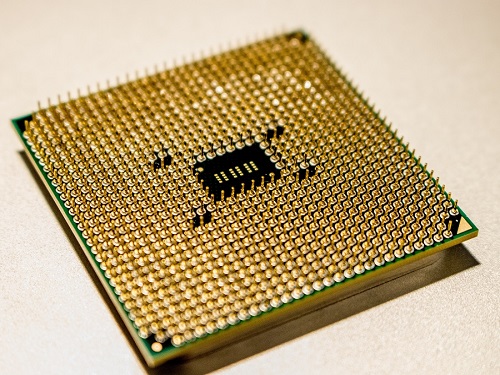
Tech Insight : What Are The Reasons For The Chip Shortage?

With the world facing a considerable semiconductor microchip shortage, we take a look at the causes and effects of the shortage plus some potential solutions.

Why Is This Important? 

Microchips are now included in virtually everything from watches to white goods and crucially in larger, high demand, big industry items such as cars. Many products have more than one chip and as the IoT market expands, so does demand for more microchips.

Why The Global Shortage? 

The global shortage of semiconductor microchips has been caused by a ‘perfect storm’ of many factors. These include:

– Car manufacturers are huge users of semiconductors. The COVID-19 pandemic, the associated slump in demand, and 50 percent slump in car sales, however, caused car manufacturers to slim down in manufacturing which, in turn, caused the semiconductor industry to operate at a much-reduced capacity, thereby reducing supply output.

– Microchip producers switched to smartphone, laptop, and tablet chips in response to a surge in demand due to remote working because of the pandemic, thereby disrupting chip markets.

– Manufacturers of semiconductor microchips, which require huge investment in plants over many years, tend to operate with low stock levels to minimise costs. The surge in demand for chips (particularly for cars) coming out of the first COVID lockdowns, therefore meant there were no backup supplies, chip manufacturers would need time to adapt to switch back to car chips, and manufacturers could not meet demand.

– 780 semiconductor manufacturing plants in the US have been closed over the last 20 years whilst production was moved overseas. This left the US with little backup for chips following the COVID years.

– With most chips being manufactured in Taiwan, the US trade war with China during the Trump administration caused supply problems due to sanctions (e.g. US chip firm Xilinx having to stop supplying to China, and Huawei being put on a trade blacklist).

– There was significant under-investment in 8-inch chip manufacturing plants owned by Asian companies. Also, most of the production in Asia is concentrated into the Taiwan Semiconductor Manufacturing Co Ltd (TSMC) and Samsung, who manufacture on behalf of hundreds of other different chip companies.

– Weather and other events disrupted supply and worsened the global shortage of semiconductor microchips (e.g. droughts in Taiwan – water is needed in chip production), winter storms in February shutting-down the NXP semiconductor plant in Texas, and a fire at the AKM semiconductor plant in Nobeoka, Miyazaki, Japan (October 2020). The AKM factory (owned by Renesas Electronics Corp), for example, accounts for a massive 30 per cent of the global market for the microcontroller units used in cars.

The Impact 

Examples of some of the main impacts caused by the global shortage have been:

– Massive disruption, damage to profits, and job losses in the car industry and in car supply chain businesses. For example, Ford, Toyota, and VW partially mothballed factories and car manufacturers produced fewer of their less profitable vehicles.

– Phone manufacturers have delayed model releases. This has affected the phone companies’ profits and competitiveness and has had a knock-on in phone retail businesses.

– There have been games console shortages, which were compounded by an increase in demand over lockdown. For example, Microsoft faced production challenges with Xbox Series X/S. This also produced a knock-on effect for games console retailers.

– There have been Knock-on effects into the development of 5G networks (e.g. in the UK and US).

– The semiconductor industry is fragmented with many companies having similar, small amounts of market share, with no single company controlling every application. This has meant that manufacturers have been struggling to get all the components and materials for any one system, thereby disrupting production.

Possible Solutions 

The main solution to tackling the global shortage has been for countries to implement the costly and time-consuming measures of setting up their own semiconductor microchip factories to try and guarantee at least some increased level of supply, and to reduce reliance upon countries with whom there may be a difficult relationship.

In July this year, for example, the US Senate voted across party lines to pass the “CHIPS plus” bill which will deliver $52.7 billion for domestic chip manufacturing and research subsidies. It will also mean $2 billion extra for less advanced legacy chips.

Also, US sanctions forced China to start investing heavily in its local tech companies such as Zhaoxin, Huawei, and SMIC to help deal with the shortage.

These developments will take time, and with most of the last year’s output already sold, it is anticipated that the shortage and many of its effects may carry on for this year and longer.

More Concerns 

There are additional concerns over possible semiconductor supply issues such as:

– Most of the world’s semiconductors are produced in factories in Taiwan and South Korea, and with China’s apparent threat to Taiwan, this could affect supply.

– The UK launched an inquiry into the semiconductor industry and the UK government has delayed a decision about whether the UK’s largest producer of semiconductors, Newport Wafer Fab, can be bought by a Chinese-owned manufacturer. This is partly due to worries over the security of chip designs used in UK defence projects.

What Does This Mean For Your Business? 

For any businesses that require semiconductor microchips for manufacturing, or for business that supply and sell goods and devices that include these chips, the last few years have been precarious with production supply shortages and production delays. The near future still holds uncertainty and potentially damaging disruption and shortages which could continue to impact upon operational decision-making, hit profits, and have a negative impact across supply chains. There are now worries over China’s potential threat to Taiwan and how that would affect supply if the worst happened, but the US has now passed legislation to enable a serious ramping-up of the semiconductor manufacturing industry there, although building the plants will take time. Also, Japan and the EU have recently been investing in and expanding their facilities to try and tackle supply problems. For example, Intel is to spend €33 billion in mainland Europe on semiconductor research and manufacturing, which could (in 5 years) go some way to helping reduce reliance on chip manufacture in Asia, although Intel has also urged the UK to develop a microchip strategy which Intel’s boss says the UK lacks, and which could leave the UK at a disadvantage in chip supply going forward. The near future is, therefore, still uncertain as regards semiconductor supply and how that may affect UK businesses, but it is likely that there will be a few more bumps in the road over the next few years.

Tech Insight : Where Do People Get Their News From?

With young people now unlikely to read newspapers or watch the TV news, and following the latest Ofcom report, we look at which channels people get their news from.

Decline of Printed Newspapers 

Newspaper readership has been declining for many years but the drop in readership during the pandemic years has been much more pronounced, e.g. 35 percent of the population (mostly over 55s) reading printed newspapers, dropping to 24 percent, a fall of almost a third by 2022. It also looks unlikely that online versions of the newspapers are picking up the slack since their readership dropped from 20 percent to 19 percent over the same period.

Adults 

In the U.S. for example, a Pew Research Center survey (2020) found that 86 percent of adults get news from a smartphone, computer, or tablet “often” or “sometimes,” and 68 percent get news from tv at least sometimes, and 40 percent do so often.

In the UK, a YouGov poll shows that 50 to 64-year-olds mostly rely upon the national tv news (64 percent), news websites (45 percent), and radio, with only a small proportion (18 percent) choosing social media as their source.

For 25 to 49-year-olds, although 46 percent of them look at news websites and 34 percent look at the national TV news, the number of those getting their news from social media is much higher at 31 percent.

For adults generally, tv news is their most trusted source but, as revealed by the Ofcom study, social media is their least trusted.

Teens Get Most Of Their News From Social Media – TikTok And Instagram, Yet They Don’t Trust It 

The Ofcom survey shows that teens (12 to 15-year olds) get their news from social media rather than traditional news channels. The number of teenagers using the BBC one and two tv channels, for example, has fallen by nearly half from 45 percent five years ago, to 24 percent now.

Instagram, TikTok and YouTube are now the most popular news sources among this young age group, for the first time ever. Instagram is the most popular news source among young people, and is now used as the main news source by 29 percent of teens, with TikTok and YouTube close behind on 28 percent.

Although young people get most of their news from social media and are likely to be influenced to an extent by the opinions of social media influencers (who may also get their news from social media!) this doesn’t mean that they can’t analyse how accurate some stories may be. For example, only half of YouTube and Twitter users think that these social media channels provide trustworthy news stories and fewer than a third of teenagers (30 percent) say that they trust TikTok’s news content.

Families Too 

However, the biggest source of news for teens (65 percent) is their families. This means that although teens favour social media for news, they may actually be getting their news second-hand from their parents, whose sources are less likely to be social media, and more likely to be online news sites of more traditional media like TV news.

Looking at it from the opposite direction, more traditional news channels now get some of their stories from social media such as TikTok or YouTube.

What Does This Mean For Your Business? 

For businesses hoping to influence and reach teens and young people, a good social media strategy appears to be essential. For traditional newspapers, the environment appears to be getting much tougher not just in terms of maintaining circulation figures, but also in trying to hold onto share with their online versions, while desperately hanging onto their advertising revenue as the news market evolves. On-demand tv and online alternatives have also made things tougher for tv news. We now live in a world where those born between 2005-2010 haven’t known a world without social media, so it’s not surprising that so many young people turn to social media for news. This, however, has also meant that social media platforms have needed to invest more in tackling fake news and its spread, with some opting for their own fact-checked and curated news. There’s also the situation where social media news feeds into traditional news channels as stories are created and broken first via these fast and direct routes. It looks, however, as though those growing up with social media trust it more naturally and value the way that it democratises opinion and can be easily accessed on the go. Social media platforms, therefore, appear to be trusted news sources to many more people going forward, while traditional news sources are having to try and change and evolve to reach audiences.