
All posts by Paul Stradling

Tech News : Jail Coder Course Shows Positive Results

US-based researchers have reported that the ‘Brave Behind Bars’ college-accredited, zoom-based web design course for prisoners has improved their sense of self-worth and given them digital literacy skills that help them stay out of prison.

Brave Behind Bars 

The 12-week Brave Behind Bars computer science and career-readiness program was expanded in 2022 to include 40 men and women from six US correctional facilities. The 2023 program was further expanded to support 55 incarcerated men and women from across the eastern United States.

The course teaches students to develop skills in digital literacy, web design, and career-readiness, through building websites to help address some of society’s most pressing issues.

The Brave Behind Bars program was launched by 3 PhD students in 2021 with the support of The Educational Justice Institute at Massachusetts Institute of Technology (MIT) and MIT CSAIL (the largest lab at MIT). It became an independent nonprofit in 2023 and has been joined by two dozen affiliates who instruct and coach students.

Surveys 

In a recently published research paper entitled “From Prisons to Programming: Fostering Self-Efficacy via Virtual Web Design Curricula in Prisons and Jails”, the Brave Behind Bars researchers published the findings of surveys with participating students plus a second study to measure students’ general and computer self-efficacy both before and after completing the program.

The Findings 

The researchers reported that participants “overwhelmingly reported an increase in self-confidence, attributing their newfound self-belief to the course.”  The findings showed the transformative power of computing tools in enabling learners to realise their own capabilities, i.e. an increase in self-efficacy – a person’s belief in their capacity to execute behaviors necessary to produce specific performance attainments.

The researchers also reported that “the course also appeared to help individuals overcome their initial hesitations or shyness, contributing to increased self-efficacy” and that “the students also found great value in the real-world application of their skills, particularly in creating meaningful websites”.  Participants in the research also praised the inclusive and personalised nature of the instruction.

The research used both qualitative (interviews) and quantitative analysis to help determine its success and the researchers reported that the quantitative analysis showed that mean self-efficacy scores increased at the end of the course for both general and computer self-efficacy.

What Does This Mean For Your Business? 

The approach taken by the “Brave Behind Bars” program highlights both the role that education and digital literacy can play in transformative justice and sheds light on broader implications for the tech sector and business communities involved in similar initiatives. This research, carried out through partnerships with recognised institutions like MIT, shows the positive impact that targeted educational programs can have on people within carceral settings, e.g. by enhancing their self-efficacy (confidence), preparing them for reintegration into society, and potentially giving them something of value that they can use to break old patterns and move forward in a more positive direction.

For businesses, particularly those within the tech industry, the findings from the research offer a case for the integration of social responsibility in their business models. Companies may want to consider partnering with educational programs that aim to reduce a pattern of offending through skill development. This may not only contribute to societal benefits but could also help businesses tap into a diverse pool of talent who are eager to apply their newly acquired skills in real-world scenarios. Such engagement could also bolster a company’s brand image, help fulfill its corporate social responsibility objectives, and project a positive company image and values.

Also, for those who were involved in this research (from researchers to program facilitators), there’s now a clear pathway to further explore the scalability of similar initiatives. The positive outcomes suggest that similar programs could be replicated and tailored in different contexts, potentially impacting a broader spectrum of the incarcerated population (there are 2 million people in prison in the US alone). Expanding such programs could also drive more comprehensive data collection, aiding in refining educational techniques that enhance self-efficacy and, subsequently, employability.

From a tech sector perspective, the success of the Brave Behind Bars program indicates a growing intersection between technology, education, and social justice. Businesses in the tech industry have an opportunity to lead the way in innovating software and educational tools that are adaptable to various learning environments, including prisons. This could mean developing secure, scalable platforms that support remote learning (by Zoom as in this program) or creating content that is specifically geared towards increasing digital literacy and professional skills among underserved populations.

Given the significant challenges of deploying and studying education programs within carceral settings, the research conducted by the Brave Behind Bars initiative provides real value. It not only provides a blueprint for how educational programs can be effectively implemented in such challenging environments but it also demonstrates the significant role of education in increasing self-efficacy as a method to combat repeated offending. For businesses, this research offers a unique perspective on the power of education and technology to make a meaningful difference, advocating for increased involvement in correctional education as a tool for positive social impact.

Irrespective of the setting, increasing people’s self-efficacy via training can only be a good thing.
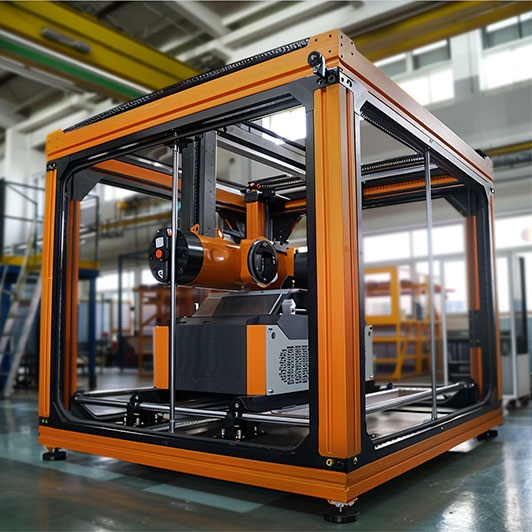

Tech News : World’s Largest (House-Sized) 3D Printer

Maine University in the US has announced that its new 3D printer has smashed the former Guinness World Record to become the largest 3D printer in the world, making it a significant step forward in the next generation of advanced manufacturing.

Factory of the Future 

The new printer, dubbed Factory of the Future 1.0 (FoF 1.0), unveiled on April 23 at the Advanced Structures and Composites Center (ASCC), is incredibly four times larger than its predecessor.

Prints Objects 96 ft x 32 ft! 

Maine University says its new 3D thermoplastic polymer printer can print objects as large as 96 feet long by 32 feet wide by 18 feet high and can print up to 500 pounds per hour.

Dynamically Switches Too 

Also, rather than being just a large-scale printer, it can dynamically switch between different processes such as large-scale additive manufacturing, subtractive manufacturing, continuous tape layup and robotic arm operations.  It’s also planned for Main University’s existing large MasterPrint 3D printer to be used in collaboration with the new record-breaking one, sharing the same end-effectors or by working on the same part.

Uses 

Maine University says the massive Factory of the Future 1.0 3D printer could have multiple uses, including:

– Eco-friendly and cost-effective manufacturing for numerous industries.

– The development of biobased feedstocks from wood residuals (abundant in Maine).

– Supporting national security, i.e. being used by the Army Corps of Engineers.

– Building affordable housing / Biohomes (the 3D printer is as big as a house after all).

– Bridge construction.

– Building ocean and wind energy technologies.

– Building lightweight rapidly deployable structures of various kinds.

– Maritime vessel fabrication.

Ahead of Green Engineering and Materials Factory 

Main University has highlighted how the development of the massive new 3D printer comes ahead of this summer’s planned groundbreaking of a new 47,000-square-foot research laboratory called the Green Engineering and Materials (GEM) Factory of the Future. MaineHousing’s Development Director Mark Wiesendanger said: “Maine needs an estimated 80,000 additional homes by 2030, many specifically for households with incomes at or below the area median income” and how the 3D printer “creates another means of producing quality affordable housing, while further driving costs down, and using abundant wood residuals from Maine’s sawmills”. 

Composite Materials Research and Advanced Manufacturing 

UMaine President Joan Ferrini-Mundy highlighted how “This new capability not only reinforces UMaine’s Carnegie R1 research designation, but also reaffirms our standing as leaders in composite materials research and advanced manufacturing”. 

What Does This Mean For Your Business? 

The new record-breaking 3D printer heralds a transformative era for multiple industries, particularly in sectors like housing, advanced manufacturing, and national security (in the US at the moment). The fact that the printer is as big as a house and can work at the rate of 500 pounds per hour promises to revolutionise the future approach to production and construction.

For the housing sector, particularly in addressing Maine’s pressing need for an estimated 80,000 additional homes by 2030, FoF 1.0 represents a pivotal advancement. The ability to rapidly and cost-effectively produce large-scale structures directly from biobased materials could dramatically reduce both construction times and costs, making housing more accessible to those with limited financial means. Projects like BioHome3D showcase the potential for sustainable housing solutions that are not only affordable but also environmentally friendly, and that leverage local wood residuals to help combat deforestation and reduce waste.

In terms of national security, the flexibility of FoF 1.0 to switch between different manufacturing processes enables the production of lightweight, rapidly deployable structures and maritime vessels. These capabilities may be crucial for developing infrastructure that can be quickly assembled in crisis zones or used in various defence applications, enhancing the strategic agility of the military and allied forces using it.

For Maine University itself, this technological leap reinforces its reputation as a leader in composite materials research and advanced manufacturing, and by fostering such innovations, the university can expand its educational and research capabilities and help position itself as a key player in the global push towards advanced technological solutions in manufacturing.

In terms of the broader field of advanced manufacturing and materials science, the integration of large-scale additive manufacturing with other processes enabled by the printer could lead to breakthroughs in everything from energy-efficient building methods to the creation of new composite materials that could be used in high-stress, high-performance environments.

Ultimately, the Factory of the Future 1.0 is not just a milestone for Maine University or that state’s housing market, but it offers the potential for modern technology to address some of the most pressing challenges of our times i.e., meeting demand for affordable housing, and environmental sustainability.

An Apple Byte : Apple / OpenAI iPhone Talks Renewed

It’s been reported (Bloomberg) that Apple is (back) in discussions with OpenAI about potentially using OpenAI’s generative AI technology to power some new features being introduced in the iPhone later this year.

Although Apple is reported to be talking to OpenAI, it was also reported last month that Apple was talking to Googe about licensing its Google’s Gemini chatbot for new iPhone features.

It is therefore not yet clear whether Apple will decide to partner with OpenAI, Alphabet Inc (Google), or another AI provider for the AI features of its next iPhone operating system, iOS 18.

Security Stop Press : Beware Fake, AI-Generated Investment Scams In Facebook

A recent BBC investigation has highlighted how fraudsters are using fake, AI-generated scam stories, often with bogus celebrity endorsements, as paid-for Facebook adverts that link through to fake investment scheme pages (cloaking scams).

It’s been reported that the scammers beat Facebook’s automated detection systems by first creating an ad that links through to a harmless page and after the ad has been approved, the scammers then introduce a redirect to a malicious page.

Under the Online Safety Act, online services will be required to assess the risk of their users being harmed by illegal content on their platforms. The advice is to always research, check, and verify celebrity endorsements and investment legitimacy, consult professionals, and report suspicious ads to protect yourself from fraudulent schemes.

Sustainability-in-Tech : New 3D Printer Automatically Identifies Different Sustainable Materials

There’s an increasing range of renewable and recyclable materials now available yet 3D printers have historically been limited by the need to create new parameter sets for each one. However, MIT researchers have now made a 3D printer that can automatically identify the parameters of unknown materials on its own.

Overcoming The Parameter Limitations 

The problem with having to 3D print a new material from scratch up until now has been that typically at least 100 parameters must be set up in the software which controls how the printer will extrude the material as it fabricates an object. The materials commonly used for 3D printing (e.g. mass-manufactured polymers) already have established sets of parameters (that were only perfected through lengthy trial-and-error processes).

Now, with the need to use more renewable and recyclable materials (the properties of which can fluctuate widely based on their composition) making fixed parameter sets in the 3D printer for each one is nearly impossible to create, with the only option to date being users having to set all the parameters by hand.

However, researchers at the Massachusetts Institute of Technology (MIT) appear to have solved this problem by developing a 3D printer that can automatically identify the parameters of an unknown material on its own.

How? 

The new 3D printer is able to work out the parameters for different materials thanks to a modified extruder which can measure the forces and flow of a material. A load cell measures the pressure being exerted on the printing filament, and a feed rate sensor measures the thickness of the filament and the actual rate at which it is being fed through the printer.

The data gathered by the new extruder (via the load cell and feed rate sensor, in a 20-minute test) can then be fed into a mathematical function that is used to automatically generate printing parameters. The parameters can then be entered into off-the-shelf 3D printing software and used to print with a never-before-seen material.

In experiments with six different materials, several of which were bio-based, the new 3D printer was able to automatically generate viable parameters that consistently led to successful prints of a complex object.

As lead researcher Neil Gershenfeld, pointed out: “The goal is to make 3D printing more sustainable”. 

Opens The Door For More Recycled and Bio-based Materials 

Looking ahead, as noted by Alysia Garmulewicz, an associate professor in the Faculty of Administration and Economics at the University of Santiago in Chile: “By developing a new method for the automatic generation of process parameters for fused filament fabrication, this study opens the door to the use of recycled and bio-based filaments that have variable and unknown behaviours. Importantly, this enhances the potential for digital manufacturing technology to utilise locally sourced sustainable materials.” 

Also, the researchers have said that they will be applying their discovery in other areas of advanced manufacturing, as well as in expanding access to metrology (the scientific study of measurement).

What Does This Mean For Your Organisation? 

This discovery by the MIT researchers could be a significant advancement for businesses looking to embrace green manufacturing practices. This breakthrough not only saves time (and money) and simplifies the 3D printing process but also offers the potential for companies to innovate in ways that are both economically and environmentally sustainable.

For businesses, the implications of this technology go far beyond the mere convenience of automation. This printer could enable the use of a wider range of renewable and recyclable materials, significantly reducing dependency on traditional, often non-sustainable materials. As a result, organisations may be able to lower their environmental impact and align more closely with evolving regulations and consumer expectations regarding sustainability.

The ability of this printer to handle materials with variable and unknown behaviours also opens the door to using more locally sourced materials. This could be particularly beneficial for businesses aiming to reduce their carbon footprint by minimising the logistics associated with transporting materials. Also, it enhances the potential for creating more personalised and localised products, catering to specific market demands with greater agility.

The discovery of this new 3D technology could also bring further innovations in digital manufacturing. It may help businesses to explore new product designs and applications without the extensive time and cost previously involved in trial-and-error parameter setting. This may not only accelerate product development but may also make small-scale, bespoke production runs more feasible and cost-effective.

Crucially, the incorporation of more recycled and bio-based materials into mainstream manufacturing processes, facilitated by this new technology, could help more businesses contribute to a circular economy. This shift may help conserve natural resources and also open up new business opportunities in the recycling sector. Companies that can efficiently convert waste into valuable printing materials may be more likely to thrive in an increasingly resource-conscious market.

Tech Tip – Restore Points For System Recovery

Creating ‘restore points’ regularly in Windows could save you from unexpected system failures and software installation issues and allow you to undo system changes by letting you return your computer to a previous state. Here’s how it works:

– Search for Create a restore point in the Start menu and open it.

– Under the ‘System Protection’ tab, ensure that protection is turned on for your system drive.

– Click ‘Create’ to start the process of creating a restore point. Give it a descriptive name e.g., the date, to remember what prompted the creation (like before installing new software).

– Click ‘Create’ again, and Windows will generate a restore point, capturing your system settings and configurations at that time.

– If needed, you can now restore your system by returning to this dialog and selecting ‘System Restore’, then following the prompts to revert to a selected restore point.

Featured Article : LinkedIn Testing Premium Company Pages

LinkedIn is testing a ‘Premium Company Page’ subscription service for SMEs which includes AI-produced content and tools to grow follower counts, as well as other features to raise the profiles of subscribers.

What Is It? 

LinkedIn says the LinkedIn Premium Company Page is: “a subscription to help you make your Page stand out and convert more LinkedIn members into clients for your business. Premium Company Page gives you access to certain features that are only available to premium subscribers.” 

How Much? 

This service is rumoured to cost a pricey $99.99 per month per Page, reducing to $839.88 per page for an annual subscription. LinkedIn says that users can subscribe to their Premium Company Page from their Page super admin view. Users do not need a Premium Business subscription to get a Premium Company Page (these are separate subscriptions).

What Do You Get? 

The LinkedIn Premium Company Page offers users a range of premium LinkedIn features. These are:

– A custom call-to-action (CTA) button. As the name suggests, this is a button in which users can select their own custom name and unique url (for the call-to-action). Super admins who subscribe to the Premium Company Page can add this call-to-action button at the top of the Page, feed posts, and search result cards.

– The “Who’s visited my Page?” feature.  Again, as the name suggests, this feature allows Page admins to review visitor traffic and demographic trends across different time periods in Visitor Analytics. The Admin of a Premium Company Page can also use this feature to review a list of recent visitors to your Page within the Who’s Visited your Page section, subject to those visitors’ privacy settings. Admins can also see up to one new visitor’s details each day when eligible members visit the Page.

– The “Custom Testimonial” feature allows the inclusion of a testimonial or quote from a client and an optional image at the top of a subscriber’s LinkedIn Page. Linked says this feature will be made available “gradually.”

– Perhaps the most noteworthy feature is the “AI-powered post-writing assistance.” In other words, this is the use of LinkedIn’s generative AI (only available with a Premium Company Page subscription). LinkedIn says subscribers can use it to “generate a first draft of a post for your Page using your ideas on a topic” and that the tool “quickly transforms your ideas into a draft that you can edit before posting.” 

The ability to “auto-invite engaged members to follow your Page.”  LinkedIn says, with this feature “you can grow your followers by automatically inviting members who engage with your content to follow your Page” and that “After you enable automatic invitations (auto-invites), members who publicly reacted, commented on, or shared your posts in the past 30 days will be invited to follow your Page”. 

A gold LinkedIn ‘IN’ logo in the top right corner of each subscriber’s Page header to show that they have a Premium Company Page subscription. LinkedIn says this will help subscribers’ pages to stand out.

Premium Services – Monetising LinkedIn 

LinkedIn’s Premium Company Page is another example of how Microsoft’s LinkedIn has been engaged in significantly monetising its platform through the introduction and expansion of premium services, although these services still represent a relatively small percentage of overall users. This year, for example, LinkedIn’s premium subscriptions saw a notable 55 per cent growth year-over-year (Kinsta), highlighting the popularity of these services and the marketing efforts of LinkedIn.

Examples of other primary premium services offered by LinkedIn include:

– LinkedIn Premium Career. This service is designed to help individuals enhance their job search and career development by offering features such as the ability to see who viewed their profile, detailed insights into competitive applications, and direct messaging capabilities through InMail.

– LinkedIn Sales Navigator. This tool is geared towards sales professionals and offers advanced search capabilities, lead recommendations, and the ability to track potential and existing clients. It’s useful for generating leads and managing sales processes.

– LinkedIn Learning. Formerly known as Lynda.com, LinkedIn Learning provides a wide range of courses aimed at professional development, covering topics from business and technology to creative subjects.

– LinkedIn Premium Business. This service focuses on providing deeper insights into business trends and the ability to make more informed decisions through more comprehensive market data.

Also, LinkedIn has rolled out other features like Collaborative Articles and verification badges, to enhance user engagement and trust on the platform. These initiatives not only improve the functionality of LinkedIn for its users but also contribute to LinkedIn’s overall monetisation strategy by making the platform more indispensable to business and career-oriented people.

While some critics have suggested that the features of LinkedIn Premium aren’t that much better than the free offerings, LinkedIn’s premium services can provide a way to gain advantages for those looking to expand their professional network and access detailed insights and opportunities not available with a basic account.

Competition 

In addition to monetising more of its premium services, LinkedIn’s Premium Company Pages also provides a way for LinkedIn to compete with other business-oriented social networking and content platforms’ offerings. For example, Facebook Business Pages, Twitter for Business/X For Business, Instagram Business Accounts, and Google My Business all offer tools that support brand visibility, customer engagement, and online marketing.

How Do You Sign Up? 

Since it’s early days and still in the testing phase, who can see the options for signing up (and a free trial first) depends on the user’s “eligibility” and LinkedIn says those who go to their LinkedIn homepage “may see different ways to try or purchase Premium.” 

What Does This Mean For Your Business? 

The introduction (it’s still being tested at the moment) of LinkedIn’s Premium Company Page service marks a strategic move by Microsoft’s LinkedIn to further monetise its platform while offering enhanced tools for SMEs to distinguish themselves in a crowded digital marketplace. This service is particularly significant as it includes AI-produced content and features designed to increase follower counts and enhance page visibility, which could potentially be a game-changer for some small to medium-sized enterprises looking to expand their reach and convert LinkedIn members into clients.

For Microsoft’s LinkedIn, the Premium Company Page service represents another layer of monetisation on an already profitable platform. By adding premium features that are targeted specifically at businesses, LinkedIn can increase its revenue streams and also its appeal as a business-to-business service provider in the competitive social media landscape. This aligns with LinkedIn’s recent strategy of rolling out more specialised and high-value features, such as Collaborative Articles and verification badges, (aimed at boosting user engagement and trust).

For SMEs, the benefits of subscribing to LinkedIn’s Premium Company Page could be substantial, if it lives up to the hype. Features like custom call-to-action buttons, AI-powered post writing assistance, and advanced analytics on page visitors could enhance the marketing capabilities of a business directly within the LinkedIn ecosystem. For example, these tools may allow businesses to craft more targeted, effective marketing strategies and to engage more personally with both existing and potential new clients. Also, the visibility boost provided by premium features like the gold LinkedIn IN logo could potentially help SMEs stand out against their competitors on the platform.

However, the introduction of these premium services is also a sign of increased competition (and monetisation efforts) among social networking platforms that cater to business users. LinkedIn’s move, therefore, places it in more direct competition with platforms like Facebook Business Pages, Google My Business, and Twitter for Business/X For Business, each of which offers tools for business visibility and customer engagement. As LinkedIn enhances its offerings, these platforms may also respond by innovating and updating their services, which could lead to a more dynamic, competitive environment that pushes further advancements in digital business tools, and provides more new marketing options for business users.

Ultimately, therefore, LinkedIn hopes its Premium Company Page will make money and help solidify its position as a leader in professional networking and as an important platform for business growth and digital marketing. As and when this service rolls out, it will be interesting to see how it influences the competitive dynamics among the major players in social media and digital marketing.

Tech Insight : ‘Networkless’ Attacks?

In this article, we look at why and how networkless attacks (which target cloud apps and identities) have created new opportunities for attackers and new risks for businesses, plus what your business can do to mitigate these risks.

The Move To SaaS and Cloud 

In the rapidly evolving digital landscape, one of the key drivers enabling attackers to compromise an organistaion without needing to touch the endpoint or conventional networked systems and services is the increased reliance on cloud-based services and software-as-a-service (SaaS) applications (to drive efficiency and innovation). This shift, while beneficial, has also created new cybersecurity challenges for businesses, primarily due to the decentralisation of ‘digital identities’ and the interconnected nature of cloud services.

The SaaS Revolution and Its Impact on Security 

The proliferation of SaaS applications is a direct result of the digital transformation that has reshaped the business world. For example, companies can now be using hundreds (if not thousands) of cloud applications to perform daily operations, from customer relationship management to financial operations. This shift is driven by the convenience and scalability of SaaS solutions, however it comes with inherent security risks.

The new risk that businesses are facing is that each application potentially serves as an entry point for malicious actors, and the interconnectivity between these apps can allow a breach in one service to cascade through to others.

Why Digital Identities Are The New Security Battleground 

As the traditional network perimeter dissolves, digital identities become the new security frontier. Put simply, a digital identity can be a user account created for services that someone in the business has signed up for using a username/email and password. More broadly, it can also mean other personal data used to identify and authenticate users online.

These digital identities, which provide access to a myriad of cloud applications, are now central targets for attackers. Securing them has become increasingly complex due to the sheer number of them that businesses may be using and their dispersion across various cloud platforms, each with its own security environment. This decentralisation not only makes consistent security policies harder to enforce but also increases the complexity of monitoring these identities for potential breaches.

How Attackers Are Exploiting Vulnerabilities in Cloud Identities 

Attackers have adapted to this new environment by developing sophisticated techniques to exploit vulnerabilities in cloud identities without ever touching the physical endpoints or traditional networked systems.

Examples of techniques include AiTM (Adversary in The Middle) phishing, SAMLjacking, and Oktajacking, all of which exploit weaknesses in the authentication processes and session management of cloud services.

AiTM phishing involves intercepting and manipulating real-time data during a session to steal credentials or manipulate transactions. SAMLjacking and Oktajacking focus on manipulating Single Sign-On (SSO) processes to gain unauthorised access.

Security stats now increasingly reveal that attackers are deliberately targeting cloud services as a way into organisations. For example, CrowdStrike figures show that 3 out of 4 attacks last year were malware-free (malware used to be one of the main threats) and that the targeting of cloud services has increased 110 per cent. This helps to illustrate why cloud identities are the new digital perimeter and that Cloud apps and identities (because of the shift to cloud services) now give attackers the same result as old-style attacks without them having to try and breach a network perimeter via the endpoint.

The Security Gap in Identity Management 

Despite advances in cybersecurity, it’s clear to see why many businesses are now vulnerable to identity-based attacks. Traditional security measures like endpoint detection and response (EDR) systems and firewalls, for example, are less effective in a cloud-centric world where applications are accessed primarily through web browsers. This gap is exacerbated by the reactive nature of many security strategies, which focus on mitigating threats after they have been detected rather than preventing them proactively.

What Does This Mean for Your Business? 

For UK businesses, their move to the cloud and the usage of a wide range and complicated combination of SaaS apps, digital identities, and the interconnection and decentralisation of these have meant that they are now vulnerable to networkless attack techniques, perhaps without realising it until now. The shift to cloud computing has not only expanded the attack surface but also highlighted the inadequacies of traditional security models in protecting digital identities. This means that UK businesses must now take a much closer look at the security of these identities as part of their overall cybersecurity strategy.

To mitigate the risks associated with networkless attacks, businesses should perhaps consider adopting a zero-trust security model, which assumes that threats could be internal or external and verifies each identity and device continuously, regardless of their location. Additionally, enhancing visibility across all cloud services and implementing advanced security measures like multi-factor authentication (MFA), behavioral analytics, and more sophisticated identity and access management (IAM) solutions could help.

In short, as these networkless attacks continue to evolve, UK businesses must be proactive with security, stay vigilant and adapt their security strategies. By understanding the vulnerabilities associated with digital identities and cloud services, and implementing security measures accordingly, businesses can safeguard their assets in the cloud era.

Tech News : Microsoft Deepfakes Too Dangerous For Release

Microsoft says its new VASA-1 AI framework for generating lifelike talking faces of virtual characters is so good that it could easily be misused for impersonating humans and, therefore, Microsoft says it has “no plans” to release any aspect of it until it can be sure it can be used responsibly.

What’s The Problem? 

2024 is an election year in at least 64 countries (including the US, UK, India, and South Africa) and the risk of AI being misused to spread misinformation has grown dramatically.  In the US, for example, the Senate Committee on the Judiciary, Subcommittee on Privacy, Technology, and the Law has held a hearing titled “Oversight of AI: Election Deepfakes”. There is also now widespread recognition of the threats posed by deepfakes and proactive measures are being taken by governments and private sectors to safeguard electoral integrity. AI companies are keenly aware of the risks and have been taking their own measures. For example, Google’s Gemini has been restricted in the kinds of election-related questions that its AI chatbot will return responses to.

Google has also recently (in a blog post) addressed India’s AI concerns as regards its potential impact (deepfakes and misinformation) on what is the world’s largest election. None of the main AI companies have, therefore, wanted to simply release their latest updated generative AI without being seen to test them and include what safeguards they can against misuse. Also, none of the main AI companies are keen to be publicly singled-out as enabling electoral interference.

VASA-1 

Microsoft says its VASA-1 AI can produce lifelike audio-driven talking faces, generated in real-time, all from a single static portrait photo and a speech audio clip.

How Good Is It? 

Microsoft says that its premier model, VASA-1, is “capable of not only producing lip movements that are exquisitely synchronised with the audio, but also capturing a large spectrum of facial nuances and natural head motions that contribute to the perception of authenticity and liveliness.” 

The “core innovations” of VASA-1 include “a holistic facial dynamics and head movement generation model that works in a face latent space, and the development of such an expressive and disentangled face latent space using videos”. 

See some demos of VASA-1 in action here: https://www.microsoft.com/en-us/research/project/vasa-1/

Key Benefits

Microsoft says some of the key benefits of the VASA-1 model that set it apart are:

– Realism and liveliness. The model can produce convincing lip-audio synchronisation, and a large spectrum of expressive facial nuances and natural head motions. It can also handle arbitrary-length audio and stably output seamless talking face videos.

– Controllability of generation. Microsoft says its diffusion model accepts optional signals as conditions, such as main eye gaze direction and head distance, and emotion offsets.

– Out-of-distribution generalisation. In other words, the model can handle photo and audio inputs that weren’t present in its training set, e.g., artistic photos, singing audios, and non-English speech.

– Power of disentanglement. VASA-1’s latent representation disentangles appearance, 3D head pose, and facial dynamics, enabling separate attribute control and editing of the generated content.

– Real-time efficiency. Microsoft says VASA-1 generates video frames of 512×512 size at 45fps in the offline batch processing mode and can support up to 40fps in the online streaming mode with a preceding latency of only 170ms, evaluated on a desktop PC with a single NVIDIA RTX 4090 GPU.

Not Yet 

However, Microsoft says it is holding back the release of VASA-1 pending the addressing of privacy and usage issues, stating that: “we have no plans to release an online demo, API, product, additional implementation details, or any related offerings until we are certain that the technology will be used responsibly and in accordance with proper regulations”. 

What Does This Mean For Your Business?

Given what VASA-1 can do, you’d think Microsoft would be itching to get VASA-1 out there, monetised, and competing with the likes of Google’s Gemini family of models. However, as with Gemini and other generative AI, it may not be fully ready and may have some issues – as Gemini did when it received widespread criticism and had to be worked-on to correct ‘historical inaccuracies’ and woke outputs.

This is also, crucially, an important and busy electoral year globally with governments nervous, trying to introduce legislation and safeguards, and keeping a close eye on AI companies and their products’ potential to cause damaging deepfake and misinformation/disinformation and electoral interference issues, as well as their potential for use in cybercrime. As such, AI companies are queuing up to be seen to be acting as responsibly and ethically as possible, claiming to be holding back and testing every aspect of their products that could be misused – at the same time basically avoiding the eyes of governments and regulators, and potentially bad publicity and penalties.

As some have pointed out, however, it would be difficult for anyone to regulate who uses certain AI models for the right or wrong reasons and that some very sophisticated open source models can be made from source code found on GitHub by those who are determined. All that said, it shouldn’t be forgotten that VASA-1 appears to be very advanced and could offer many benefits and useful value-adding applications, e.g. for personalising emails and other business mass-communication. It remains to be seen how long Microsoft is prepared to wait before making VASA-1 generally available.