Tag Archives: sustainability

Sustainability : Noise-Powered Camera Could Help Climate Change Science

The development of a battery-free, wireless underwater camera by MIT engineers could help to build more accurate climate models and help scientists to better understand how climate change impacts the underwater world.

Challenges 

A massive 95 percent of Earth’s oceans never been observed, meaning that we have seen less of the ocean than we have the far side of the moon or the surface of Mars. This leaves a huge gap in our knowledge about the planet. Also, the complexity of undersea exploration and the high cost of powering an underwater camera for a long time whilst tethering it to a research vessel or sending another vessel to frequently recharge its batteries has seriously limited the chances of making greater progress in widespread ocean observation.

The New Camera 

Engineers at The Massachusetts Institute of Technology (MIT), a private land-grant research university in Cambridge, Massachusetts, have developed a battery-free, wireless underwater camera that is about 100,000 times more energy-efficient than other undersea cameras, and is powered by sound. The revolutionary new camera takes colour photos, even in dark underwater environments.

Uses Sound Waves For Power 

The autonomous camera converts mechanical energy from sound waves traveling through water into electrical energy that powers its imaging and communications equipment. The sound it uses to power itself can come from any source e.g., a passing ship or marine life.

MIT says that, because it doesn’t need a power source, the camera can run for weeks on end before retrieval.

Also, after capturing and encoding image data, the camera again uses just sound waves to transmit data to a receiver that reconstructs the image.

The Advantages 

Some of the advantages that the autonomous, battery-free, sound-powered underwater camera could bring include the ability to:

– Enable scientists to search remote parts of the ocean for new species.

– Capture images of ocean pollution or monitor the health and growth of fish raised in aquaculture farms.

– Monitor the health and growth of fish raised in aquaculture farms.

– Track ocean pollution and monitor the effects of climate change.

Tested 

A prototype version of the camera has been tested in several underwater environments and has been successful in capturing high-quality images. The researchers now plan to enhance the device to optimise it for deployment in real-world settings.

What Does This Mean For Your Organisation? 

We are at a point where understanding more about pressing issues like the effects of ocean pollution e.g., plastic, and the effects of climate change e.g.., on the weather is vital. Also, finding new species could help us find new medicines, food sources, or other beneficial discoveries. This is why, after so many years of literally being in the dark about a large part of the planet’s surface, a camera of this kind could be a breakthrough that could have knock-on benefits for all of us going forward. Not only does it solve a long-standing practical challenge, and could provide some incredible images, but it could be a timely development that could help power the fight against damaging climate change.

Sustainability In Tech : Fracking Up

With the UK’s ban on fracking for shale gas in England that has been in place since 2019 now formally lifted, we look at the technology involved and how fracking fits in with the idea of sustainability.

What Is Fracking? 

Fracking is the term for drilling into geologically complex layers of rock, and pumping a mixture of pressurised water, sand, and chemicals at a shale rock layer to release the oil and gas inside.

Why Was It Banned? 

Fracking in the UK was banned after the industry regulator, the Oil and Gas Authority (OGA), said it was not possible to predict the magnitude of the earthquakes it might trigger. For example, back in 2018, the British Geological Survey reported that 120 seismic events (earth tremors) were detected during the drilling for fracking at Cuadrilla’s site at New Preston Road in Blackpool.

There were also concerns that the chemicals used in fracking could find their way into and contaminate the water supply.

Why Is It Back On? 

After New Prime Minister Liz Truss said earlier this month that fracking would be allowed, and Business and Energy Secretary Jacob Rees-Mogg said that in the light of the oil and gas problems resulting from Russia’s invasion of Ukraine, all domestic sources of energy needed to be explored, the ban on Fracking in Britain has been lifted.

What Technology Does Fracking Use? 

Although early experiments took place in the 1940s, the modern method for fracking is reported to have been developed by an oil company worker who was trying to turn around the failing fortunes of an area with natural gas wells called Barnett Shale in Texas back in 1995. There are many different types of possible fracturing technologies that could be used but hydraulic fracturing technology is the main one.

Since fracking involves drilling a long way down into the earth to somewhere that is not visible, geological knowledge and computer models are used in fracking. Back in 2019, for example, the UK government conducted a review of software used by the oil and gas industry to model hydraulic fracturing, to help the Environment Agency to understand what the computer models did, how they operated, and what information they could give to help assess environmental risk at individual sites.

At the time, seven modelling packages were identified as the most common, each with different levels of sophistication, and each providing different results. It was concluded that the capacity to simulate any effects of induced fractures on existing fracture networks was important, and that a reliance on hydraulic fracturing simulators alone as proof of compliance was not feasible, especially in new areas of exploration. The review suggested that techniques such like geophysical monitoring would help to confirm simulations.

How Sustainable Is Fracking?

Back in 2018, research from The University of Manchester looked at the environmental, economic, and social sustainability of shale gas in the UK and compared it to other electricity generating options such as coal, nuclear, natural gas, liquefied natural gas (LNG), solar photovoltaics (PV), wind, hydro and biomass. The study concluded that fracking is one of least sustainable options for producing electricity, any future electricity mix would be more sustainable if it had a lower rather than a higher share of shale gas, and that huge improvements would be needed for shale gas to be considered as sustainable options like wind and solar PV.

Also, campaigners opposing fracking say that, given that shale gas is a fossil fuel, and global warming is a major issue, energy firms and governments may be better investing renewable and green sources of energy.

What Does This Mean For Your Organisations? 

There are differing theories and opinions about how much gas could actually be obtained from fracking. Even the new Chancellor of the Exchequer, Kwasi Kwarteng, was recently reminded of something he was quoted as saying back in March 2022 (when he was business secretary):  “No amount of shale gas from wells across rural England would be enough to lower European price any time soon.”  Prime Minister Truss has said recently that developers will be only given permission “where there is local support”, but there is likely to be considerable opposition from campaigners and protesters wherever fracking resumes. Organisations of all kinds now face the challenge of higher energy bills, and the country also faces supply challenges caused by Russia’s war against Ukraine. Some commentators don’t’ believe that fracking in the UK will be enough to bring down energy bills significantly unless the government can agree a price with the fracking companies. It remains to be seen how fracking in Britain proceeds from here, but with much opposition, it is likely to be a bumpy ride.

Sustainability-In-Tech : Stockholm’s E-Ferry : World’s Fastest Electric Passenger Vessel

The Candela P-12 Shuttle electric ferry, recently unveiled and due to enter service in between Stockholm city and the Ekerö suburb next year, can dramatically cut journey times.

Faster Than Stockholm’s Cars and Subway?

The makers of the world’s fastest, longest-range, and most energy efficient electric ship ever, the electric-powered the Candela P-12 Shuttle, claim that not only is it environmentally friendly, but will make Stockholm’s waterborne public transport faster than cars and subway!

30 Passengers At 30 Knots

The company makes this claim because the powerful electric engine and hydrofoil design mean that the 30-passenger waterborne shuttle can travel at 30 knots, making it a faster way to commute than the subway and bus lines it competes with, and faster that Stockholm’s rush-hour traffic. The electric engine also means that it is much more energy efficient than diesel passenger buses and trains.

Saves Commuters 50 Minutes Per Day

Stockholm commuters are currently facing a 55-minute trip by bus, subway, or conventional ferry (or even car during rush hour) whereas the Candela P-12 Shuttle will cover the 15 km route in only 25 minutes – saving the commuter an average 50 minutes per day!

Hydrofoils Reduce Drag

Candela says that the secret to the P-12 Shuttle’s high speed and long range are the three carbon fibre active hydrofoil wings that extend from under the hull, allowing the ship to lift itself above the water, thus decreasing drag.

Energy Efficient

The Candela P-12 Shuttle’s manufacturers say that its electric engine technology reduces energy per passenger kilometre by 95 per cent compared to current vessels, allowing for an unprecedented range of 50 nautical miles at service speed. This means that, at the equivalent of 0.1 kWh of electricity per passenger kilometre, the P-12 is more energy efficient than a hybrid electric bus. The electric direct-drive engine also means no noise from gears, no oil changes, and no maintenance.

Battery

Also, with up to 200 kW DC charging, the Candela P-12 Shuttle can charge its battery in under one hour!

The End Of Sea Sickness?

One unexpected bonus of a ferry that combines lifting itself above the water with a computer which regulates the hydrofoils 100 times per second is an incredibly smooth ride, which could mean no sea sickness for passengers.

Successful Trial Could Mean A Shift To The Waterways

The first P-12 Shuttle is due to undertake a nine-month trial period during 2023 and, if it meets expectations, the hope is that Stockholm’s fleet of over 70 diesel vessels will eventually be replaced by P-12 Shuttles. This could also mean a shift away land transport on congested highways to the city’s waterways.

What Does This Mean For Your Organisation?

City commuting is often major source of frustrating congestion for workers, but also of pollution from the cars and the diesel public buses and trains. An environmentally friendly, sustainable, fast, and comfortable alternative, such as the P-12 Shuttle could be the welcome shape of things to come. For canal cities and cities with waterways that lead right into or close to the centre from suburbs, provided the price is right and the capacity is available, commuters may be tempted to switch from the bus of train to the water shuttle instead. City councils are also likely to favour schemes that cut emissions, reduce city centre congestion, and present a forward-thinking, environmentally conscious image of a city. Although many cities are now switching to electric buses and trains/trams, electric ferries don’t suffer the same traffic congestion problems and this reliability and timesaving may be more attractive to commuters.

Sustainability In-Tech : Are Wind Turbines Really All That Green?

A study by the University of South Australia’s Future Industries Institute has revealed that no plan for the recycling of end-of-life wind turbines has meant that they are causing a waste problem that looks set to get worse.

What’s The Problem?

There are several key issues at the root of the end-of-life wind turbine waste problem. These are:

– Although 85 per cent of a wind turbine is already recyclable, the materials used in wind turbine blades are notoriously difficult to recycle. For example, only 30 per cent of the fibre-reinforced plastic material commonly used in wind turbine blades can currently be reused to form new composite materials, with most ending up in the cement industry (a large CO2 producer anyway) as filler material or incinerated in cement factories as part of the cement-making process. Although substituting coal, sand, and clay with the blade materials has been reported to bring a 27 per cent reduction in CO2 emissions when making cement, this is still not an ideal green solution.

– The cost of recycling the blades and the low market value of recovered materials are not providing the motivation to develop a recycling solution.

– There is currently no clear recycling plan for old wind turbines, and no legislation for their end-of-life management.

– Wind turbine production is increasing and yet the turbines only have a 25–30-year lifetime, both of which mean there’s an increasing pile of wind turbine blades needing to be disassembled with no clear plan for doing so. Estimates say there could be as many as 14,000 waste wind turbine blades in Europe by 2023.

– Although there are some projects that use discarded wind turbines, they don’t represent a real commitment to circular design and critical end-of-life planning.

– It is not currently clear whether the responsibility for recycling of wind turbine parts rests with the manufacturer or the operator.

– Some wind turbines also face security risks because they still run on Windows 2000, the security updates for which ended in 2010!

Many Go To Landfill 

As things stand, in addition to turbine blades being used in cement, many other wind turbine parts simply end up in landfill.

Some Ideas 

Some businesses are already creating innovative, circular, zero-waste solutions for the re-use of wind turbine blades. For example:

– US company Global Financial Solutions makes manufacturing-grade fibres, pellets, construction materials, panels, and other related products from the wind turbine blades.

– German company Wings for Living creates outdoor furniture and artwork from the old wind turbine blades.

What Does This Mean To Your Organisation? 

As the UniSA Future Industries Institute report suggests, even though legislation which could be used for the regulative framework for the end-of-life management of wind turbine blades already exists, it is not being used effectively for this. Ideally, policy makers and all involved stakeholders need to find a way in the very near future to work together to produce regulations that actually address the management of waste coming from wind turbine blades. Wind turbine production is increasing, as is the waste problem and a potential PR disaster for the industry looks more likely the longer there is no definite recycling plan with clear responsibilities in place. It is in everyone’s interest that regulations are developed sooner rather than later.

Sustainability-In-Tech : World-First All-Hydrogen Train Just Emits … Water!

French company Alstom has announced a renewable energy world-first by operating a 100 per cent hydrogen train which only emits steam and condensed water while operating with a low level of noise.

Replacing Diesel Trains 

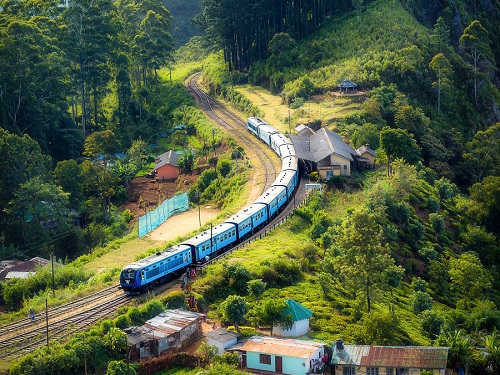
The train called the Coradia iLint, which operates on a route in Bremervörde, Lower Saxony, Germany, is the first of 14 new hydrogen-powered regional trains purchased by LNVG to replace 15 diesel trains with a greener alternative.

The problem with diesel trains in environmental terms is that, although they are relatively low CO2 producers per passenger mile (because they carry multiple passengers per train), each train produces a lot of CO2, Nitrogen dioxide (NO2), and air polluting particles.

How Does The Hydrogen Train Work? 

The completely emission-free and quiet train, developed for use on non-electrified lines, uses new hydrogen and fuel cell technology. The Coradia iLint train also features several innovations such as clean energy conversion, flexible energy storage in batteries, and intelligent management of motive power and available energy.

The train is refuelled daily using hydrogen gas from a facility which has sixty-four 500-bar high-pressure storage tanks with a total capacity of 1,800 kilograms, six hydrogen compressors, and two fuel pumps. The train has a maximum speed of 140 km/h and can run all day one tank of hydrogen with a range of 1000 km.

The Benefits Of Using Hydrogen 

Using hydrogen as the train’s fuel reduces the environmental burden, as one kilogram of hydrogen replaces approximately 4.5 litres of diesel fuel, but with only steam and condensed water as the emissions rather than greenhouse gases and polluting particles.

Award-Winning And Government Funded 

The train, which is the recipient of the 2022 German Sustainability Design Award, was designed by Alstom teams in Salzgitter (Germany), and in Tarbes (France), and was funded by the German government as part of its National Hydrogen and Fuel Cell Technology Innovation Programme.

What Does This Mean For Your Organisation? 

Replacing diesel (and petrol) vehicles of all kinds with viable and practical but green alternatives is a priority in reducing global warming. Not only does this train only emit steam and water, which makes it much more environmentally friendly option than a diesel train, but it can travel at high speeds and go all day on just one tank of hydrogen. Also, using hydrogen rather than electric doesn’t put more strain on the electric grid (the train runs on non-electric lines) and create any other CO2 that would be the by-product of creating more energy at the power station. This makes the hydrogen train not just green but comparable in performance terms to diesel trains. It is perhaps not surprising, therefore, that the manufacturers, Alstom, say they’ve received more orders for hydrogen trains in Germany, France, and Italy. The fact that there was significant government funding and help to develop the technology also shows how countries can invest successfully in finding alternatives to much of polluting technology that we still rely upon in our transport networks.

Sustainability-In-Tech : All iPhones To Be Powered By Renewable Energy By 2030 Says Apple

Apple’s Vice President of the environment, Lisa Jackson, has announced that all iPhones will be powered by renewable energy by 2030.

Acquiring Renewable Energy From Wind Farm 

The announcement was made in Australia while celebrating the company’s 40th anniversary there. It is understood that, in line with this announcement, Apple will be acquiring renewable energy from a new Australian wind farm in Queensland, which could supply 80,000 homes with electricity.

Lisa Jackson said of this latest green target, “At Apple, we recognise the urgent need to address the climate crisis, and we’re accelerating our global work to ensure our products have a net-zero climate footprint across their entire lifecycle.” 

Entire Business Carbon Neutral By 2030 

The hope is that in addition to already achieving carbon neutrality two years ago for its corporate activities e.g., Retail Stores, Offices, and Travel, Apple now plans to make its entire business, including supply chain and customer products carbon neutral by 2030. This means that  iPads, Macs, and iPhones will need to run entirely on renewable energy by that date.

How? 

The reason why Apple can say this when you’re plugging your iPhone charger or Mac into your normal electric socket at home as usual is because it has it has examined usage patterns across its 1.8 billion devices and knows that this accounts for 22 per cent of the company’s overall carbon footprint. Therefore, if Apple can offset that percentage with renewable energy from projects like the massive Australian windfarm, it will be able to say that it has reached carbon neutral status for its users’ devices and is powering all iPhones with renewable energy.

Global Facilities Powered By Clean Energy Since 2018 

Apple has long been committed to reducing its carbon footprint. For example, as far back as April 2018, Apple announced that, as part of its commitment to combat climate change and create a healthier environment, its global facilities were powered with 100 percent clean energy. At the time, this included its retail stores, offices, data centres and co-located facilities in 43 countries, including the UK.

What Does This Mean For Your Organisation? 

Apple is one of the many big tech companies engaged in looking seriously at reducing the carbon footprint of their entire chain and making sure that this is widely communicated to customers. Critics could point to how most of an iPhone’s lifetime carbon emissions are made in the production phase and to news stories such as a lawsuit against a recycler that appeared to have instead diverted old phones to China (in 2020). Also, the company’s drive to sell new devices inevitably has green consequences and, as organisations like Greenpeace have said, offsetting projects don’t deliver what’s actually needed which is “a reduction in the carbon emissions entering the atmosphere.” That said Apple has been focusing for many years on how it can become a much greener company. It is which is good news for all users of their products and for wider society that a massive global business is setting itself some quite challenging environmental targets.

Sustainability-In-Tech : Sand Battery For Year-Round Heat

Finnish engineers, Markku Ylönen and Tommi Eronen have made a giant battery which stores heat from green energy in sand that can be used as an all-year-round energy supply.

Sand Battery 

The Finnish engineers’ company, Polar Night Energy, has made a sand battery in Kankaanpää, in the west of Finland. The battery consists of large silo which has been filled with low-grade, coarse sand. The sand is then heated to 500º C (932º F) using heat made by cheap green, renewable electricity, such as solar or wind. The sand in the battery can be kept at that temperature for several months.

The idea is that the sand stores the heat which can then be used to heat homes in the colder months, when energy is more expensive, and when there’s not enough sun and wind to generate much of the green energy.

Designed To Support District Heating System 

In Finland, for example, district heating systems are common. These systems distribute heat generated in a centralised location through a system of subterranean insulated pipes to surrounding residential and commercial buildings. District heating systems mean that there is no need for each building to have its own furnace, thereby cutting costs, reducing reliance upon electricity, oil, or gas to heat buildings, and helping to cut pollution problems.

The sand battery was designed to help feed into this kind of system. The district heating system where the sand battery has been constructed also incorporates heat recovered from local data servers.

Carbon Intensity 

The company that built the sand battery, Polar Night Energy, says that apart from the embedded emissions from constructing the sand battery, the system only had the same carbon intensity as the energy source that provided the electricity to heat the sand in the first place.

For Single Building Or Whole Town 

Polar Night Energy also says that a sand battery could be used to heat anything from a single home to a whole town.

What Does This Mean For Your Organisation? 

The sand battery could be extremely useful and cost effective in situations where e.g., power stations would need to just work for a few hours in the wintertime, when it’s the coldest and when it’s going to be most expensive. This type of battery could also help create a more flexible, cheaper, greener, and more sustainable way of using, and storing heat, and help provide a means to get all-year round heat. However, the sand battery is still in its early stages, and it may take some considerable scaling up before it really delivers some serious benefits.

Sustainability-In-Tech : UK’s Largest Carbon Capture Facility Opens In Cheshire

Tata Chemicals Europe has opened the UK’s largest industrial-scale carbon capture facility at its chemical plant in Cheshire to convert carbon dioxide into food and pharmaceutical-grade sodium bicarbonate.

Capturing 10% Of The Carbon Dioxide Produced 

The £20 million Tata Chemicals Europe carbon capture unit at its chemical plant unit in Northwich will capture more than 10% of the carbon dioxide produced at the site’s combined heat and power plant (CHP). The anticipated capturing of 40,000 tonnes of carbon dioxide each year at the new unit will be the equivalent of taking over 20,000 cars off the roads!

Converted To Sodium Carbonate 

The carbon capture unit can claim a world-first as its unique, innovative, and patented process can convert the carbon dioxide captured from energy generation emissions into a purified food and pharmaceutical grade form of sodium bicarbonate (baking soda / bicarbonate of soda) to be known as Ecokarb®.

Exported, And Will Help Kidney Disease Sufferers 

The Ecokarb® produced at the new unit will be exported to over 60 countries, which is expected to generate tens of £millions in export revenue every year. In addition to the revenue generated, one extra special benefit of the project is that much of the sodium bicarbonate exported will be used in haemodialysis to treat people suffering from kidney disease.

Backed By Government Grant

The UK government has backed the project with £4.2m grant through the Department of Business, Energy, and Industrial Strategy’s (“BEIS”) Energy Innovation Programme. The demonstration facility marks a major step towards sustainable manufacturing and will help work towards the UK’s net zero strategy and its aims to capture up to 30 million tonnes of CO2 each year by the early 2030s (and 50 million tonnes by the middle of the next decade).

What Does This Mean For Your Organisation?

This new carbon capture and conversion facility demonstrates how technology can play an important part in not just developing global-scale sustainable manufacturing techniques, but also helping to hit CO2 emissions targets, creating new revenue streams, and helping sufferers of a disease at the same time. The government, which backed the project has also highlighted how it could attract new private capital into the UK and is boost innovation in green technologies. That said, some experts have been less enthusiastic, suggesting that since the CO2 won’t be stored at the Northwich site and will, eventually, be released into the atmosphere, this is more of an emissions decrease project rather than a permanent carbon removal scheme.

Sustainability-In-Tech : New Ultrafast Saltwater Purification Device

Researchers at the University of Tokyo have developed a device that can desalinate water at least one thousand times faster than existing methods.

A Membrane Made From Tiny Fluorine-Based Nanoscopic Rings 

Scientists at the Tokyo School of Engineering’s Department of Chemistry and Biotechnology constructed tiny fluorine-based nanoscopic rings that were coated with a hydrophobic surface of a dense molecular bond of carbon and fluorine. The fluorine was chosen because of how well it contributes to the water repellent properties of Teflon coatings e.g., on pans. The tiny rings, at 0.9 to two nanometers, much smaller than a human hairs strand which is 100,000-nanometer size, were stacked to create an impermeable lipid membrane.

Amazing Test Results 

In large and small-scale tests of passing seawater through the membranes, they were not only found to perfectly reject salt molecules but did so a thousand times faster compared to the conventional industrial machines, and 2,400 times faster compared to the hypothetical carbon nanotube desalination devices.

Technology – Computer Simulations 

The scientists first used computer simulations to predict and gauge how effective such a membrane would be in cleansing water and the real tests confirmed the success that the simulations predicted.

Applications 

Given that water covers 70 per cent of earth, but only around 3 per cent of earth’s water is freshwater and, of that, only around 1.2 per cent can be used as drinking water, a fast, effective desalination device could be very helpful. For example, this technology could help getting fresh water more quickly to more areas where there is a shortage or hazardous supplies (drinking water accessibility) and could help with agriculture and habitat protection. The abundance of seawater makes it a sustainable solution where the system (as in this case) is not energy-hungry or doesn’t have a big effect in the surrounding environment.

Uses Less Energy 

Another positive aspect of the membrane-based system is that it requires less energy to operate than other desalination systems and is easy to use. The Tokyo University scientists who developed the system also anticipate being able to make much larger membranes to use in industry, and perhaps to develop similar membranes to reduce the carbon dioxide or other undesirable waste products released by industry.

What Does This Mean For Your Organisation? 

There are large areas of the world where fresh water and drinking water are in short supply and this problem may become even worse with global warming. Being able to use an energy-efficient, effective, easy to use, and much faster system than existing desalination methods could bring real benefits to those areas in terms of basic living necessities, agriculture, habitat protection, and business. The system’s potential to be modified to help reduce industrial carbon emissions is also very promising from an environmental perspective. This project also illustrates the importance of computer simulations, models, and digital twins in speeding-up and getting a better understanding of the viability and likely performance of innovations and products before committing to building them, and to help pre-test potential changes in a cost-effective way. Technology such as simulations and models are, therefore, now an important contributor to getting sustainable ideas more quickly to market for the benefit of all.

Sustainability : Renewable Cement Made Entirely From Waste Materials

Scientists at Nanyang Technological University, Singapore (NTU Singapore) have created renewable, sustainable ‘biocement’ made entirely from waste materials, making it a greener and more sustainable alternative to regular cement.

How? 

The NTU scientists have used two common waste materials, industrial carbide sludge (the waste material from the production of acetylene gas) and urea (from the urine of mammals) to create the biocement.

Making the biocement involves creating a reaction between urea and the calcium ions in industrial carbide, which then forms a hard solid, or precipitate. The carbide sludge, combined with acid, produces soluble calcium. Urea is then added to the soluble calcium to form a cementation solution. Finally, a bacterial culture is then added to this cementation solution which breaks down the urea in the solution to form carbonate ions.

These ions react with the soluble calcium ions to form hard calcium carbonate, just like that naturally found in chalk, limestone, and marble. The reaction takes place in soil, so that the precipitate bonds soil particles together and fills the gaps between them, creating a compact mass of soil. This results in a strong, sturdy and less permeable block of biocement.

Advantages 

The advantages of creating a biocement this way include:

– Biocement production is greener and more sustainable than the methods used to produce traditional cement. For example, unlike traditional cement-making (which involves the burning of raw materials at extremely high temperatures over 1,000 degrees Celsius and producing a large amount carbon dioxide) the biocement can be produced at room temperature without burning anything. This makes the process greener, less energy demanding and carbon neutral.

– Carbide sludge is seen as waste material (in Singapore) and is abundant, adding to the sustainability of biocement production. This means that there’s no need for the mining of limestone (which is a finite resource) and, therefore, there’s less of an impact on the natural environment and ecosystem.

– If scaled-up, the process would cost less than traditional cement making.

Added Advantage – Restoring Monuments And Strengthening Shorelines

The NTU scientists have also highlighted the fact that the colourless nature of the bacterial culture and cementation solution means that when applied to soil, sand or rock, their original colour is preserved. This could make the process ideal for restoring old rock monuments and artifacts, and even strengthen the sand on the beach to prevent erosion, road repair, sealing gaps in underground tunnels to prevent water seepage, or even as cultivation grounds for coral reefs as coral larvae like to grow on calcium carbonate.

What Does This Mean For Your Organisation?

Considering that 4.4 billion metric tons of cement was produced worldwide in 2021, and how much carbon is produced in the process, and how many materials are used in it (and the impacts of mining them) – calcium, silicon, aluminium, iron, and others – biocement could be a real breakthrough. The fact that it’s cheaper (at scale) as well as being much greener and more sustainable could mean that it is a widely accepted substitute that benefits us all in terms of helping to tackle global warming as well as creating more buildings for a growing population. Biocement is still in its early stages, but it certainly looks like a sustainable substitute for traditional cement making. It could also create other business opportunities and be useful in a wide variety of environmental projects.